

Introduction
A marine environment represents one of the most challenging operational settings for any type of machinery since constant exposure to water, salt, moisture and vibrations may easily destroy regular lighting fixtures. These are the reasons why marine LED lighting was invented.
Marine LED lighting systems have been specifically engineered for maximum performance, longevity and energy efficiency when used on boats, ships and offshore applications. No matter whether you run a cargo ship, a fishing vessel, or a luxury yacht anything, investing in appropriate marine lighting systems is mandatory for safety, visibility and long-term cost savings.
This article aims to provide all the necessary information about marine LED lighting, from types and benefits to how to choose the right solution everything.
What Are Marine LED Lights?
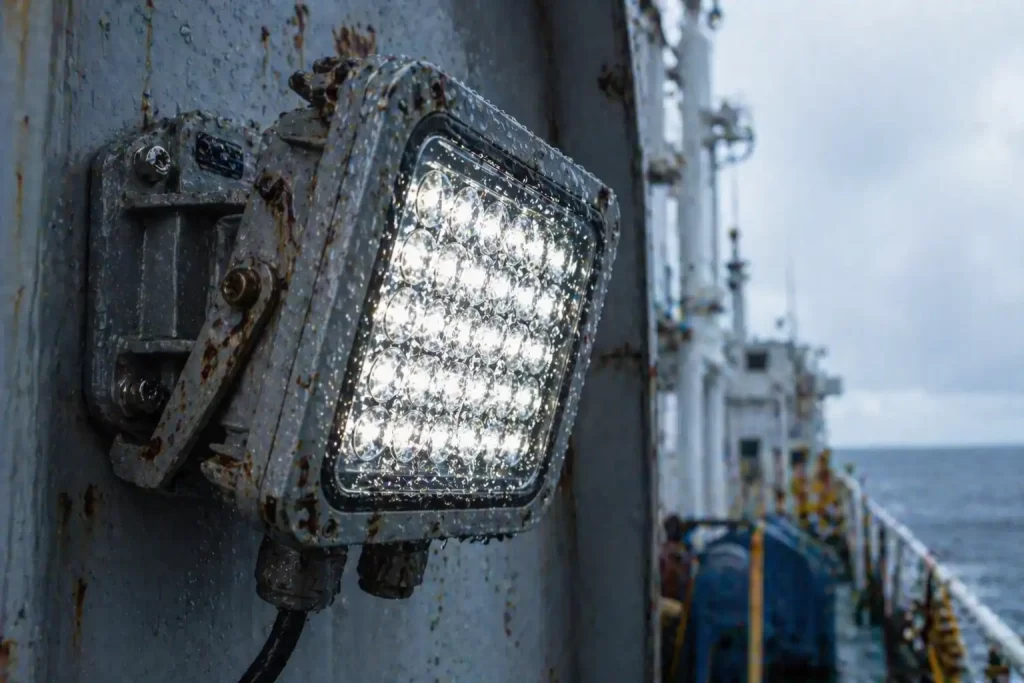
Marine LED lights are used in a marine environment because they are specifically designed to be energy efficient and waterproof. They differ from other types of lighting in that they are capable of enduring:
- Saltwater corrosion
- Extreme weather conditions
- Continuous vibrations
- High humidity levels
These LED lights operate on the principle of Light Emitting Diodes (LEDs) technology and are less energy intensive than other longer lifespan compared to conventional lighting systems.
Why Regular Lights Don’t Work in Marine Conditions
A traditional lighting system cannot withstand marine conditions owing to:
Corrosion caused by salt water
- Water ingress due to a lack of proper sealing
- Short service life because of constant vibration
- High power consumption
Marine LED light bulbs address these problems through durable design, sealed enclosures and anti-corrosion properties.
Types of Marine LED Lights
Understanding the different types helps you choose the right solution:
1. Navigation Lights
These lights are utilized to determine a ship’s position and direction, ensuring safety and compliance with marine regulation standards.
2. Deck Lights
These lights serve as sources of illumination for work zones onboard ships, specifically during night operations.
3. Underwater Lights
Lights placed below the waterline to provide proper visibility, enhance the overall aesthetic looks and attract marine life (commonly used in yachts and fishing boats).
4. Cabin and Interior Lights
Lights designed specifically for use indoors, offering comfort and energy efficiency inside vessels.
Key Benefits of Marine LED Lights
- Energy Efficiency
Compared to traditional lighting methods, LED bulbs use less electricity, thereby making them suitable for every use in ships that depend on limited energy supplies systems. - Long Lifespan
These lights are capable of lasting for 50,000 hours and more. This helps to lower the costs involved in servicing and repairing them. - Corrosion Resistance
Constructed using high-quality materials such as stainless steel to make them resistant to corrosion. - Water-resistant and Durability
Most of the lights have an IP67 or IP68 rating, which makes them durable and resistant to water and dustproof. - Better Visibility
Marine LED lights provide more brighter and more focused illumination, improving safety during navigation and operations.
Marine LED Lights vs Traditional Lighting
| Feature | Marine LED Lights | Traditional Lighting |
| Energy Consumption | Low power usage with higher efficiency (~120 lm/W) | High power consumption with lower efficiency |
| Lifespan | 30,000–50,000 hours (stable lumen output) | 1,000–5,000 hours (faster degradation) |
| Maintenance | Minimal due to long life and solid-state design | Frequent replacement and servicing required |
| Durability | High; resistant to vibration and marine conditions | Low; fragile components prone to failure |
| Heat Emission | Low heat output, better thermal management | High heat generation, energy loss |
| Water & Dust Protection | Designed with IP67/IP68 ratings for marine use | Limited protection, risk of water ingress |
| Startup Time | Instant ON, no warm-up delay | Takes time to reach full brightness (especially fluorescent) |
| Corrosion Resistance | Built with marine-grade materials and coatings | Prone to rust and corrosion in salt environments |
| Operating Cost | Lower long-term cost (energy + maintenance savings) | Higher operational cost over time |
Clearly, LED lighting is the more efficient and cost-effective solution for marine use.
Applications of Marine LED Lighting
Marine LED lighting is extensively utilized in different industries:
- Commercial vessels
- Fishing vessels
- Yachts
- Offshore platforms
- Small boats and recreational vessels
Versatility allows them to be useful for practical as well as decorative applications.
How to Choose Suitable Marine LED Lights
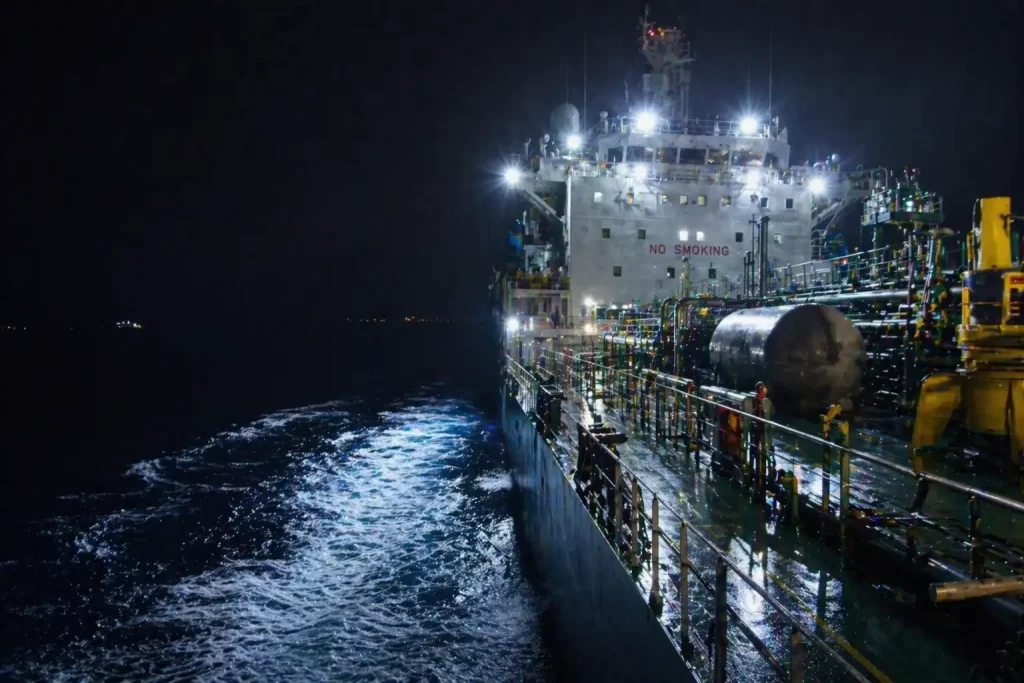
The process of choosing suitable marine LED lights involves assessing their performance characteristics as well as their environmental compatibility:
1. IP Rating (Ingress Protection)
Select products with IP67 or IP68 rating for full protection from any kind of water or dust penetration. In case of extreme offshore or underwater environments, high IP ratings are necessary.
2. Brightness/Luminous Output (Lumens)
Assess light fixtures in terms of lumens (lm), not watts.
- Deck/flood lighting: High lumens required for proper visibility.
- Interior/cabin lighting: Medium lumens required for comfort
In addition, take into account the beam angle as per the requirement.
3. Voltage & Electrical Compatibility
Make sure that the lighting fixture is compatible with your boat’s electrical setup (e.g., 12V/24V DC or AC power source).
Consider:
- Wide voltage input compatibility
- Constant current driver for reliable operation
4. Construction Quality & Material
Choose LEDs constructed using marine-grade materials like:
- Anodized aluminum
- SS316 stainless steel
They offer excellent durability against corrosion, UV rays and physical impacts.
5. Heat Dissipation
Effective thermal(heat) management is essential to increase the longevity of the LED.
Consider:
- Heat sink integration
- Proper thermal management for optimal junction temperature
6. Certifications & Compliance
Make sure that your lighting solution is in line with the necessary regulations and safety standards like:
- CE, RoHS
- Marine-specific IEC certification, or other specific certifications
This will ensure your lighting is safe and durable.
Why Should You Trust Sipani Energy with Your Marine LED Lighting Needs?
At Sipani Energy, we provide highly efficient marine LED lights designed specifically for harsh conditions.
What sets us apart:
- Innovative and energy-saving LED technology
- Durable and resistant products
- LED lighting systems for commercial and industrial marine needs
- Customized lighting options
- Emphasis on quality and durability
Whether you need lighting for ships, boats or offshore platforms, our solutions are built to perform in the toughest conditions.
Conclusion
Marine LED lighting are no longer a matter of luxury but have become a necessity in modern day marine activities. Marine LED lighting are long lasts and saves on energy costs, but also functions better than other lighting systems.
When it comes to buying high-quality marine LED lighting, getting the right manufacturer is just as important as choosing the right products.